

Spiti Valley is one of those rare travel destinations that feels like it belongs to another world entirely. A cold desert in the Trans-Himalayan region of Himachal Pradesh, Spiti is a land of ancient Buddhist monasteries, barren mountain landscapes, crystal-clear rivers, remote high-altitude villages, and roads that wind through some of the most dramatic terrain on earth.
But why specifically summer? The valley is only accessible for a few months a year — and summer (June to September) is when Spiti is at its most spectacular. The roads are open, the skies are clear, the meadows are green, and Chandratal Lake shimmers in the high-altitude sun.
Whether you are a first-time Himalayan traveller or a seasoned mountain explorer, here are 10 compelling reasons why Spiti Valley should be your destination this summer.
1. Experience the Magical Chandratal Lake
No list of reasons to visit Spiti is complete without Chandratal Lake — the crescent-shaped, turquoise Moon Lake at 4,300 metres that has become one of the most iconic Himalayan destinations in India. In summer, the meadows around the lake are green, wildflowers bloom along its edges, and the water reflects the surrounding peaks in perfect clarity. Camping beside Chandratal under the Milky Way is the kind of experience you will tell stories about for the rest of your life.
- Stunning sunrise and sunset views that paint the lake in extraordinary colour
- Camping under the stars with the Milky Way arching overhead
- Crystal-clear turquoise water unlike any lake you have seen before
- Incredible photography opportunities at every hour of the day

2. Drive Through One of India's Most Scenic Road Trips
The journey through Spiti Valley is itself a reason to visit. Whether you approach from Shimla via the Kinnaur Valley — through apple orchards, ancient temples, and the dramatic Sangla Valley — or from Manali over the Rohtang Pass, the drive to Kaza is one of the most cinematic road trips in the country. Driving along the turquoise Spiti River with towering brown and grey mountains on both sides, passing through tiny villages that seem untouched by time, crossing high mountain passes, and navigating roads carved into sheer rock faces — this is not just transportation. It is the experience.
3. Explore Ancient Monasteries
Spiti Valley is home to some of the oldest and most beautifully situated Buddhist monasteries in the world. Founded between the 10th and 14th centuries, these monasteries perch on clifftops and hilltops above the valley, offering both spiritual significance and dramatic visual impact. In summer, many monasteries host special prayers, festivals, and masked dance ceremonies that are open to respectful visitors.
- Key Monastery — a 1,000-year-old monastery on a rocky hill above the Spiti River, considered the most important in the valley
- Dhankar Monastery — perched precariously on a cliff overlooking the confluence of the Spiti and Pin rivers
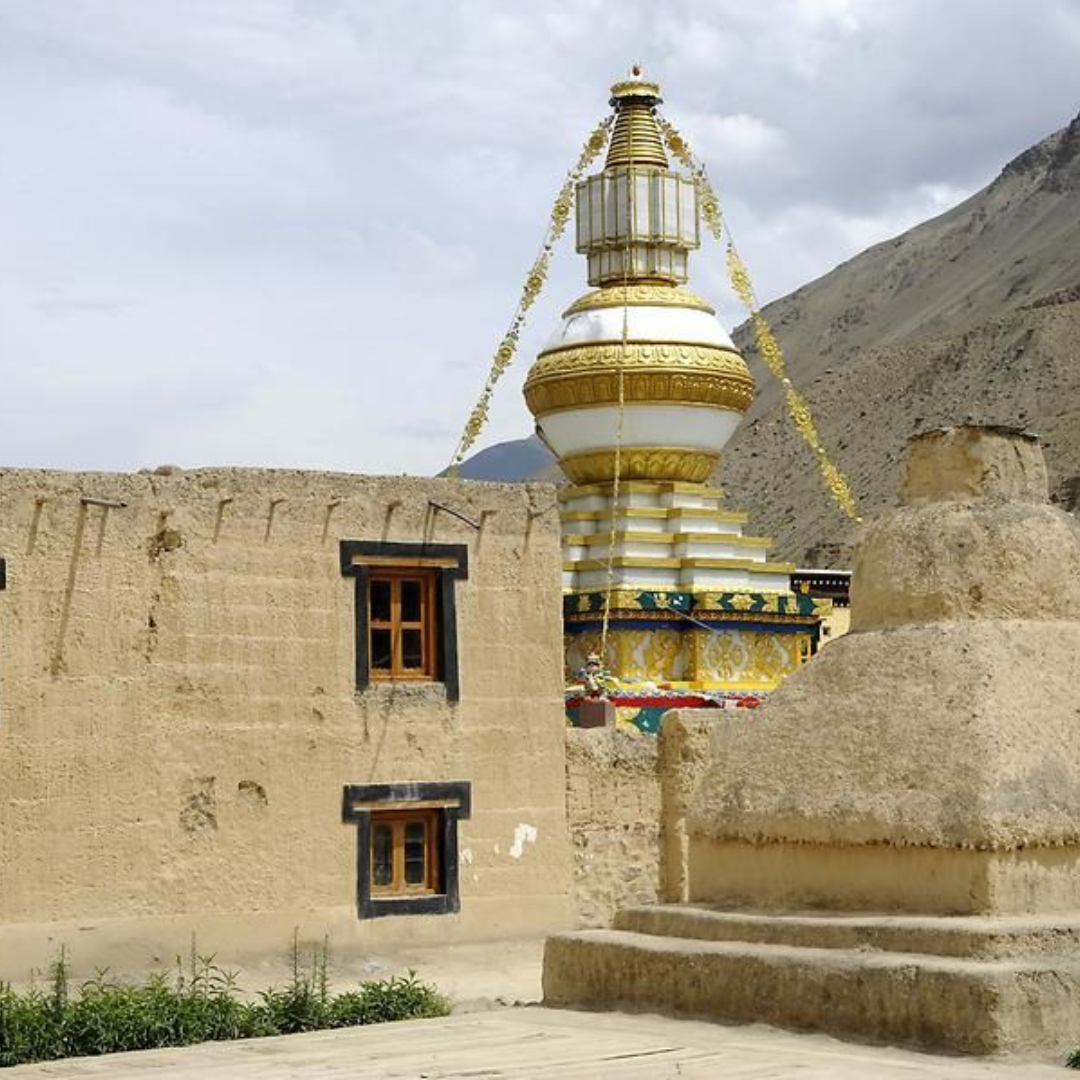
- Tabo Monastery — founded in 996 CE, known as the 'Ajanta of the Himalayas' for its ancient murals and sculptures
4. Visit the Highest Villages in the World
Spiti Valley is home to several of the world's highest permanently inhabited villages, each with its own character, landscape, and story. Driving between these villages — past yak herders, ancient stupas, prayer flags fluttering in the thin air, and fields of peas and barley — gives you an insight into a way of life that has remained largely unchanged for centuries.
- Kaza — the main town of Spiti, base for exploring the valley and gateway to the high villages
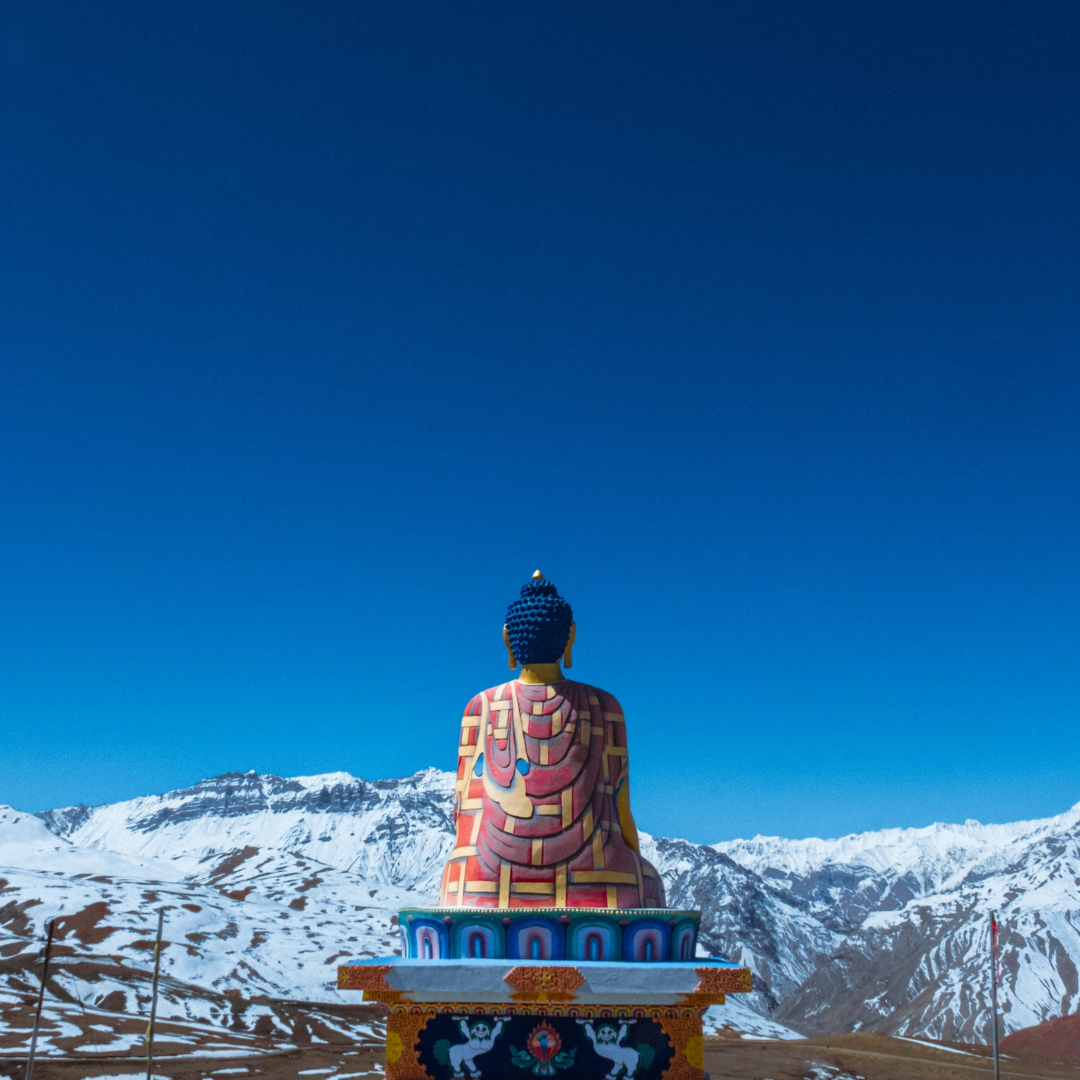
- Langza — a quiet village with a giant bronze Buddha statue overlooking the valley and fossil-rich hills
- Hikkim — home to the world's highest post office at 4,400 metres; send a postcard home
- Kibber — one of the highest motorable villages, with sweeping views of the valley and snow peaks
- Komic — one of the world's highest motorable villages at ~4,587 m, with a small monastery
Each village is a chapter in the story of human resilience and adaptation — a reminder of how extraordinary ordinary life can be when lived at the edge of the world.
5. Witness Millions of Stars Every Night
There is almost no light pollution in Spiti Valley — the nearest large city is hundreds of kilometres away and the terrain itself creates natural darkness. On a clear night, the sky above Spiti is one of the most spectacular sights on earth: a dense, shimmering field of stars from horizon to horizon, with the Milky Way clearly visible as a glowing band stretching across the entire sky. Summer nights are ideal because the sky is clear and the temperatures, while cold, are survivable with a good sleeping bag.
- Astrophotographers — Spiti is one of the best dark-sky locations in South Asia
- Nature lovers — there is something deeply moving about a sky unspoiled by human light
- Campers — stargazing from your tent door at Chandratal is an unforgettable ritual
- Anyone who loves peaceful nights — the silence of Spiti after dark is extraordinary
6. Meet Like-Minded Travellers
Spiti Valley naturally attracts a particular kind of traveller — curious, adventure-seeking, respectful of nature and local culture, and looking for something beyond the typical tourist circuit. Whether you join a group tour or meet people along the way, the shared experience of navigating high passes, reaching remote villages, and sleeping under the stars creates a sense of camaraderie that is hard to find elsewhere. Some of the best friendships are made on mountain roads, in tiny tea shops, and around campfires in the Himalayas.
7. Escape the Crowds
While the rest of Himachal Pradesh fills up with tourists every summer — Manali traffic jams, Shimla hotel queues, Kasol café crowds — Spiti Valley remains genuinely off the beaten path. The difficult roads, remote location, and limited accommodation naturally filter out mass tourism. The people who come here are here because they want to be — and that makes the entire atmosphere different.
- Quiet mountain roads with very little traffic once past Kaza
- Peaceful villages where you are a guest, not just another tourist
- Vast open landscapes where you can walk for hours without seeing another person
- Authentic Himalayan experiences rather than curated tourist performances
Spiti's remoteness is not a limitation — it is precisely what makes it special.
8. Challenge Yourself with High-Altitude Adventure
Spiti Valley is not a passive experience. Crossing the Kunzum Pass at 4,551 metres, navigating river crossings on rough mountain roads, trekking to remote viewpoints, and camping in thin mountain air all require physical and mental engagement. But the rewards are proportional to the effort — every challenging section of the journey ends with a view, a destination, or a moment that makes it entirely worthwhile. Spiti teaches you what you are capable of, and that is one of the most valuable things any travel experience can offer.
9. Capture Some of the Most Beautiful Landscapes in India
Spiti Valley is a photographer's paradise — but you don't need to be a professional to appreciate what you see through your viewfinder. Every turn in the road reveals a composition that seems almost too dramatic to be real: barren mountains in shades of ochre and brown, a turquoise river snaking through the valley floor, ancient white stupas on clifftops, and vast open skies that make you feel tiny and free at the same time.
- Chandratal Lake — turquoise water ringed by snowcapped peaks
- Key Monastery — a perfect composition of ancient stone architecture against a mountain backdrop
- Langza Buddha Statue — a serene bronze figure with the Spiti Valley below
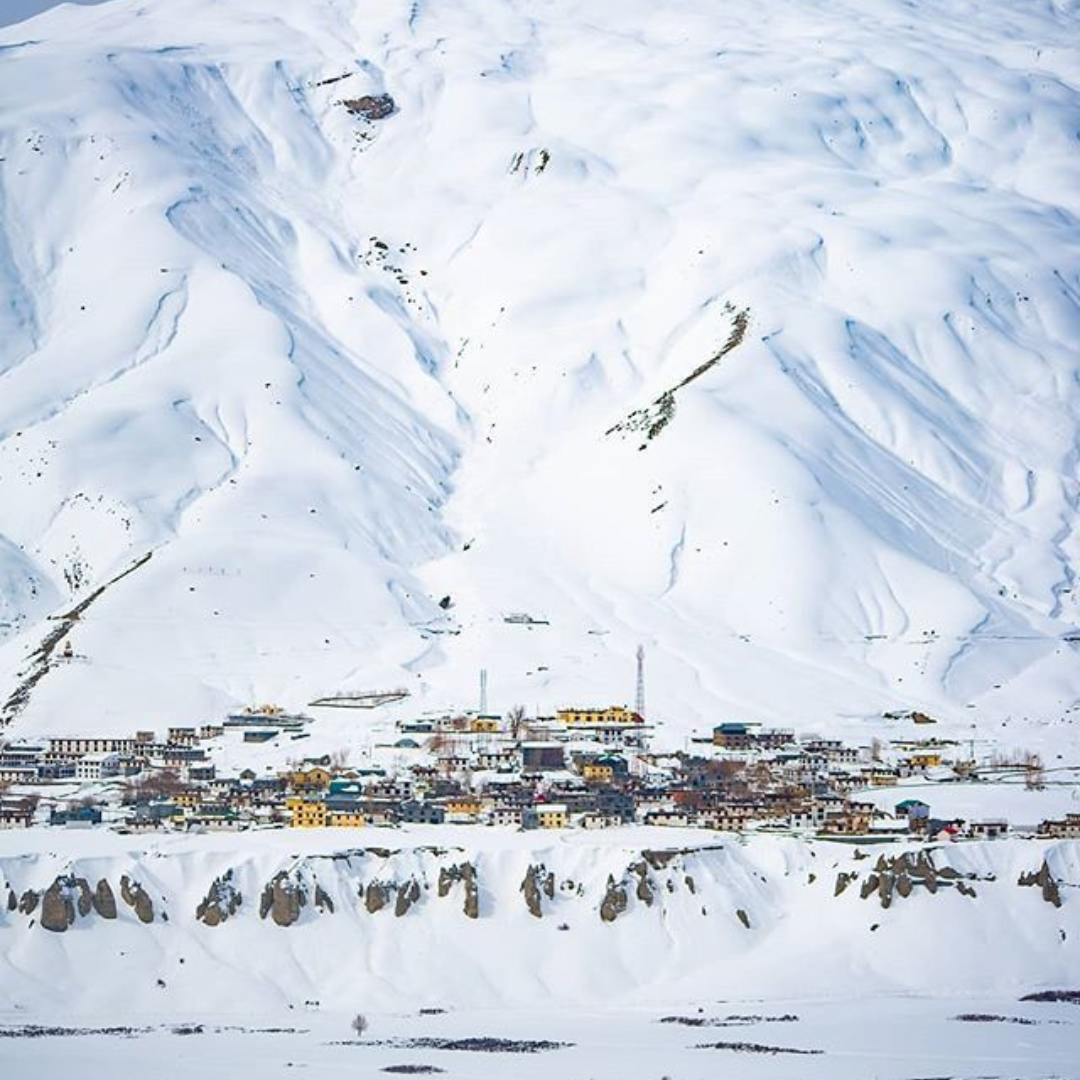
- Kibber Village — a cluster of white and beige houses on a hillside above the valley
- High mountain passes — dramatic road scenes with prayer flags and blue skies
- Endless Himalayan roads — straight lines disappearing into a horizon of peaks
Every kilometre of the Spiti circuit is worth photographing — and every photograph you take will become a memory you treasure.
10. Summer Is the Best Time to Visit
Summer is the only season when Spiti Valley is truly accessible and at its best. The road is open, the weather is stable, the landscapes are at their most colourful, Chandratal Lake is shimmering, and the monasteries are active. Whether you are joining a group tour, planning a solo bike expedition, or organising a road trip with friends, summer is your window.
- Group trips — ideal for first-timers, with logistics handled and like-minded company
- Bike expeditions — the Manali-Kaza-Shimla circuit is a classic motorcycle adventure
- Photography tours — the light and landscape in July and August are extraordinary
- Family adventures — suitable for families with older children who love nature and adventure
- Friends' road trips — few experiences bond a group of friends like a Spiti road trip
Why Choose a Group Trip to Spiti?
Spiti Valley is beautiful but demanding — the roads are rough, the altitude is high, the remoteness is real, and being ill-prepared can turn a dream trip into a stressful ordeal. Joining a well-organised group trip eliminates the logistics headache and lets you focus entirely on the experience. With experienced trip leaders who know every road and village, 4WD vehicles built for mountain terrain, pre-booked stays at every stop, and a group of like-minded fellow travellers, everything simply falls into place.
- Comfortable, reliable transportation suited for Himalayan mountain roads
- Carefully planned itineraries with proper acclimatisation days built in
- Experienced trip leaders with deep local knowledge and emergency protocols
- Like-minded travel companions who share your enthusiasm for the mountains
- Hassle-free stays, permits, and logistics — all handled for you
The best version of a Spiti trip is one where you are free to look out the window, breathe the mountain air, and simply be present.
Final Thoughts
Spiti Valley in summer is not just a trip — it is a transformation. A reminder that the world is vast, wild, and extraordinarily beautiful beyond the limits of everyday life. The mountains do not care about your deadlines, your notifications, or your worries. They simply exist, enormous and ancient, and in their presence, so do you.
If you have been dreaming about Spiti, this summer is the time to go. Book your departure, pack your warmest jacket, and let the mountains show you what you have been missing. At Serenade Travels, we run fixed-batch group departures to Spiti every week through July, August, and September — with small groups, experienced trip captains, and itineraries designed to show you the very best of the valley.
Ready to Experience It?
Summer Spiti with Chandratal Lake
Join a group departure with Serenade Travels — all logistics handled, experienced trip leader included.
View Summer Spiti Trip →